Easy to order great service great product equals very happy customer
Great quality and quick shipping. My second order.
If you’re still chasing “60% RH” and calling it a day, you’re leaving a lot of control on the table. Modern growers watch VPD instead — because it tells you what the plant actually feels, not just what the room looks like.
VPD stands for Vapor Pressure Deficit. It’s the difference between how much moisture the air could hold at a given temperature and how much it’s actually holding right now.
In simple terms:
Relative humidity (RH) only tells you how full the air is. VPD tells you how hard the air is pulling moisture off the leaf surface. That pull is what drives nutrient and water movement through the plant — and it’s why VPD is a more honest metric than RH alone.
Here’s the catch: RH changes meaning at different temperatures. 60% RH at 65°F is not the same environment as 60% RH at 80°F. The air at 80°F can hold a lot more water, so the real drying power on your plants is totally different, even though the RH number matches.
That’s why growers who only watch RH can end up with:
VPD fixes this by combining temperature + humidity into one number that reflects how aggressively moisture is moving out of the plant and your flower.
Most indoor cannabis growers aim for different VPD ranges at each stage. Exact numbers vary by grower, but the logic is the same:
Young plants have tiny root systems and can’t handle aggressive transpiration. You want lower VPD (more humid, milder “pull”) so they don’t dry out or wilt.
Once roots are established, plants can handle a bit more pull. A moderate VPD encourages strong transpiration and nutrient flow without cooking the plant.
In early flower, you still want good transpiration, but as buds stack and thicken, mold and botrytis become a bigger threat. Many growers gradually increase VPD (slightly drier) toward late flower to keep moisture out of dense colas.
The dry room is where VPD really earns its keep. Most people talk about “60/60” (60°F, 60% RH), but the real goal isn’t a magic pair of numbers — it’s a controlled, predictable moisture pull over time.
Too aggressive (VPD too high) and you get:
Too gentle (VPD too low) and you get:
By holding VPD in a tight range, you can dry in a way that feels the same to the flower even if your exact temp/RH combo changes slightly from day to day.
Because VPD is based on both temperature and humidity, anything that shifts either one will move your VPD up or down. In a real grow or dry room, that means:
Two rooms can have the same HVAC gear but totally different VPD behavior if one is crowded with plants and the other has clean, organized airflow and storage.
You don’t need to be a scientist to use VPD — you just need a consistent process. Most serious cultivators do some version of this:
The win with VPD isn’t perfection every minute; it’s trend control. You’re no longer guessing if “60% RH” is right — you’re steering toward a consistent moisture pull that your plants and product actually experience.
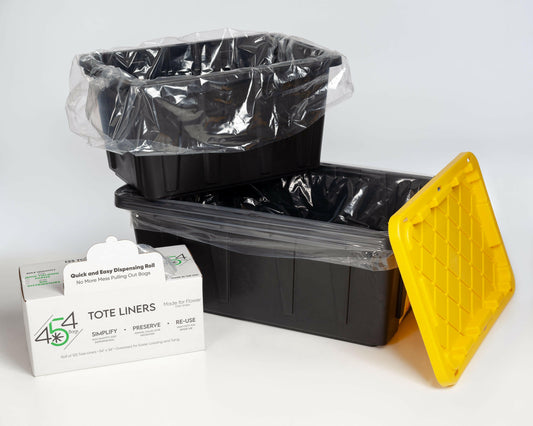
Once flower leaves the dry room and goes into bags, bins, or totes, VPD doesn’t disappear — it just becomes more localized. Inside a container, the microclimate is driven by:
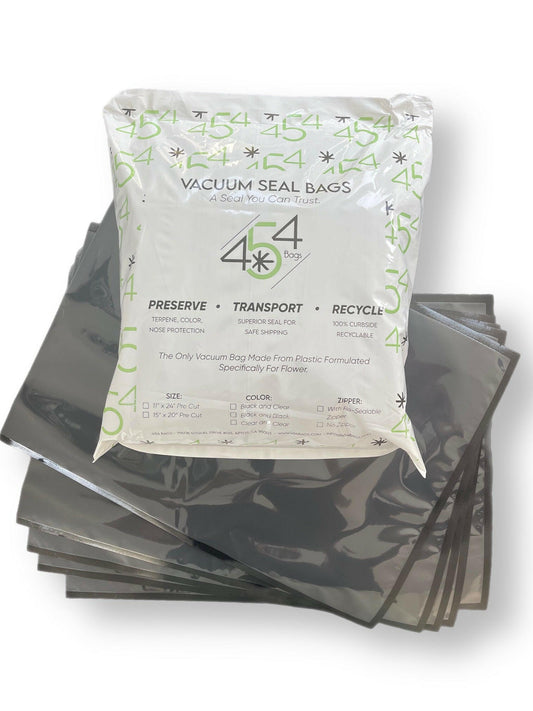
If your packaging is too breathable, the room’s VPD still dominates and buds continue to dry out. If it’s too tight but your room is warm, you can trap moisture and end up with wet cores or mold over time. Matching the right container to a dialed-in VPD strategy is what keeps product stable from harvest to sale.
VPD is just a way to think like the plant. Instead of staring at a humidity percentage and hoping it’s “good enough,” you’re asking a better question:
How hard is the air pulling moisture from my canopy and my flower right now?
When you control that pull — from veg through dry and into storage — your results stop being random. Buds cure more consistently, batches match each other, and you spend less time fighting problems like overdry product, grassy flavor, or surprise mold.
That’s why serious growers have moved past RH alone. VPD gives you a clear, repeatable way to tune the entire environment around what the plant actually feels, not just what the wall sensor says.
No comments
0 comments