


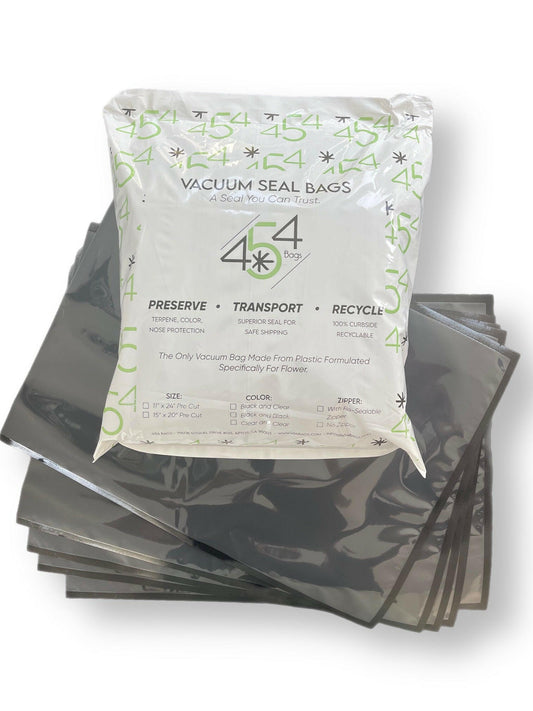

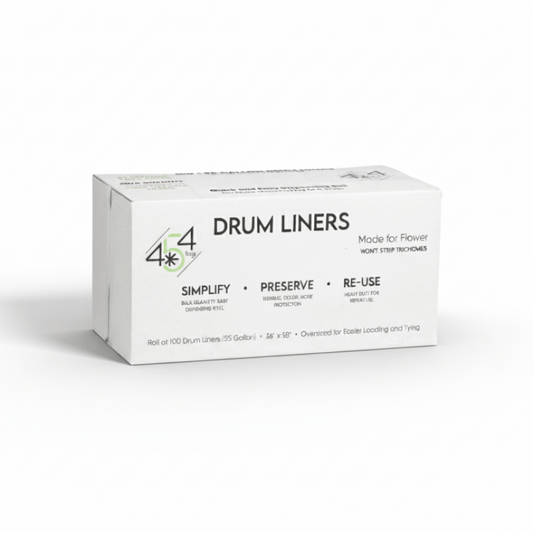
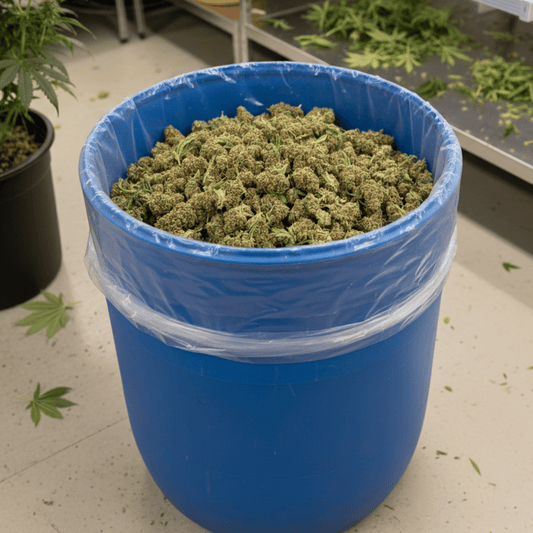
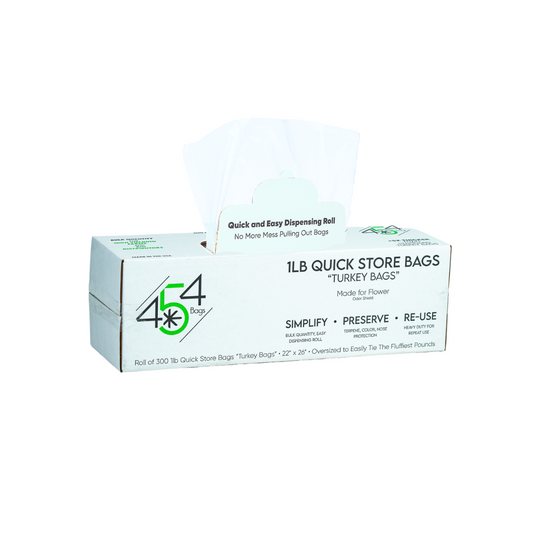

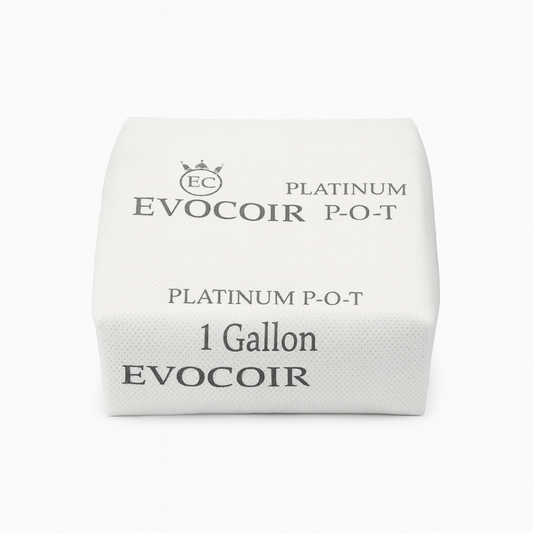
We are super happy with the liners. Has saved us so many man hours not having to wash totes. We will definatly keep using the liners
these are awesome for keeping your totes clean!
Most cannabis facilities claim to use FIFO—first in, first out. In practice, very few actually do.
Inventory rotation failure is one of the most common causes of inconsistent quality in cannabis operations. It doesn’t show up on lab tests, and it rarely triggers alarms—but it quietly shortens shelf life, creates uneven product quality, and frustrates buyers.
This article explains why FIFO breaks down in cannabis storage, how partial lots get stranded, and how professional teams maintain true rotation without slowing production.
FIFO is designed to ensure older inventory moves before newer inventory.
In theory, this:
In reality, cannabis operations introduce unique obstacles that make FIFO difficult to maintain.
Cannabis inventory is rarely uniform.
Unlike boxed goods, flower is divided into:
Once lots are split, rotation becomes a human process—not an automated one.
FIFO usually fails when a lot is partially used.
Common scenarios include:
The partial lot becomes “orphaned” and ages unnoticed.
When older and newer flower share space, rotation breaks entirely.
Mixed-lot storage leads to:
Teams often don’t realize lots are mixed until problems appear downstream.
Rotation often loses to speed.
Teams naturally reach for:
Each shortcut quietly undermines FIFO.
Inventory rotation issues don’t cause immediate failures.
Instead, they create:
Because labs still pass, the real cause is often missed.
Professional teams design storage and workflows around rotation.
Effective strategies include:
Rotation succeeds when it’s enforced by process, not memory.
FIFO is not just inventory management—it’s quality preservation.
Consistent rotation:
When FIFO fails, quality failures follow quietly behind.
Customers expect consistency.
True FIFO ensures that no batch quietly ages into disappointment while newer product ships first.
Because cannabis inventory is frequently split into partial lots and handled manually.
No. Most FIFO failures affect freshness and aroma, not compliance metrics.
Mixing lots complicates traceability and almost always causes rotation issues.
Partially used containers that are pushed aside and forgotten.
No. Physical workflow and storage layout matter just as much.
Yes. Poor rotation shortens effective shelf life without obvious spoilage.
Regularly—especially after large fulfillment or repackaging events.
No comments
0 comments