
Dry & Cure·2 min read
The Importance of Hygrometers in Cannabis Drying and Curing Rooms
Hygrometers are essential tools for maintaining optimal humidity levels in cannabis drying and curing rooms. These devices help ensure that your drying and curing environment is accurately calibrated, allowing you to achieve consistent and high-quality results. In this blog post, we explore the significance of hygrometers, how they contribute to the success of your drying and curing process, and the importance of regular calibration. By utilizing hygrometers effectively, you can create the ideal conditions for drying and curing your cannabis, resulting in superior product quality.
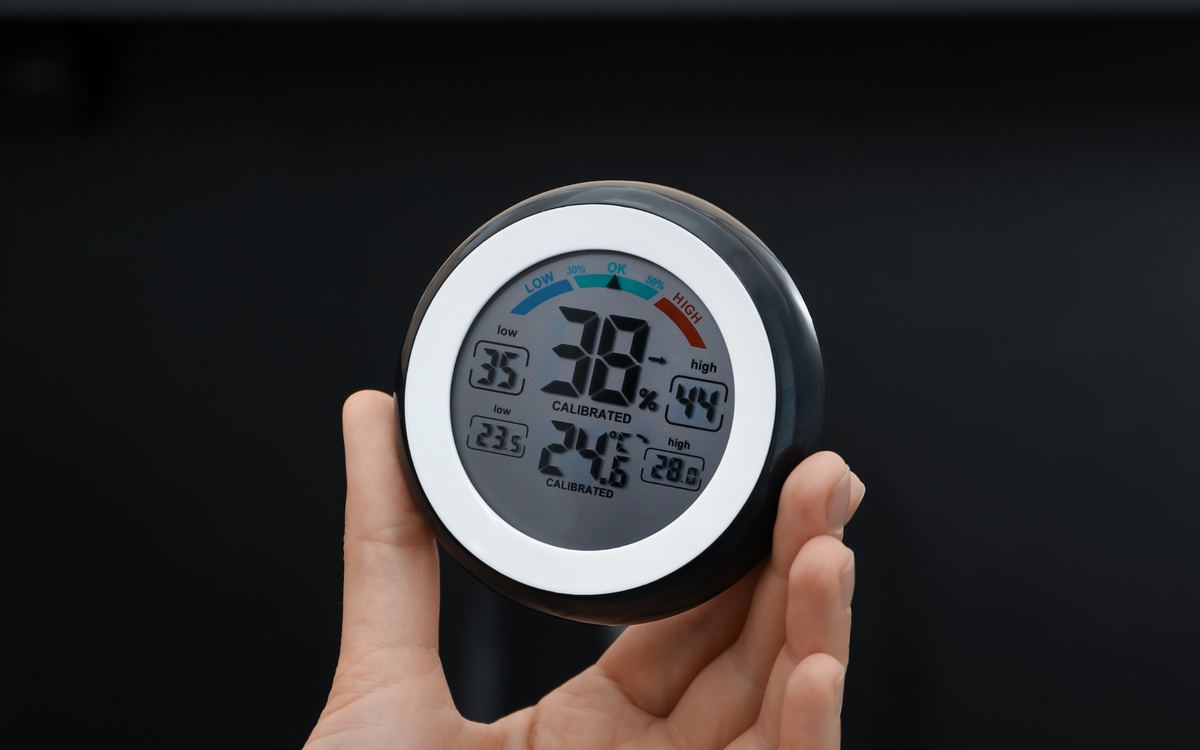
A hygrometer for curing cannabis measures relative humidity in the air around the sensor. It helps you monitor a room or container, but it does not measure the moisture percentage inside flower. Choose the instrument and placement for the question you need to answer.
Room, container and flower readings
| Where you measure | Instrument | What to record |
|---|---|---|
| Drying or curing room | Room hygrometer or temperature/RH logger | Location, temperature, RH, time and environmental changes. |
| Curing container | A sensor suitable for that container and its conditions | Container ID, temperature, RH and time since opening or resealing. |
| Stem or flower sample | Material-appropriate moisture meter | Sample type, probe method, moisture reading and lot ID. |
Place the sensor for the environment you want to measure
- Use representative room locations. A sensor beside an open door, supply vent, heater or direct moisture source can describe that local spot rather than the whole room.
- Keep the sensor's vents clear and follow its manufacturer's mounting and clearance instructions.
- For container monitoring, use a device suitable for the space. Do not bury or wet a sensor unless its instructions explicitly allow that use.
- Allow readings to stabilize after moving a sensor or opening a container. The required time depends on the instrument and conditions; follow the manufacturer rather than a universal timer.
Verify readings before changing the process
Record the device ID and its last verification date. Follow the manufacturer's accuracy specification, verification procedure and calibration interval. If two devices disagree, check their locations, stabilization time and condition before changing settings or applying an offset.
Verification checks performance against a reference. Adjustment changes the instrument. Some inexpensive sensors cannot be adjusted, so record a verified offset or replace the unit according to your procedure rather than claiming it has been calibrated.
Choose a hygrometer for your workflow
Compare the stated RH and temperature range, accuracy over your operating range, sensor size, logging capability, display access and verification options. A sensor with a convenient display is useful only if its range and placement suit the environment.
Use moisture readings alongside humidity readings
The 454 Bags Cannabis Moisture Meter supports direct stem and flower spot checks. It complements a hygrometer; it does not replace one. Neither instrument detects mold, and a pin meter does not measure water activity.
Keep both readings in the cure-room log with separate units. Use your validated process and appropriate quality checks for decisions about storage.


Reader discussion 0