
Dry & Cure·2 min read
How to Monitor Humidity During Long-Term Cannabis Storage
Build a repeatable humidity-monitoring routine for stored cannabis: sensor placement, lot records, temperature changes, inspections and escalation.
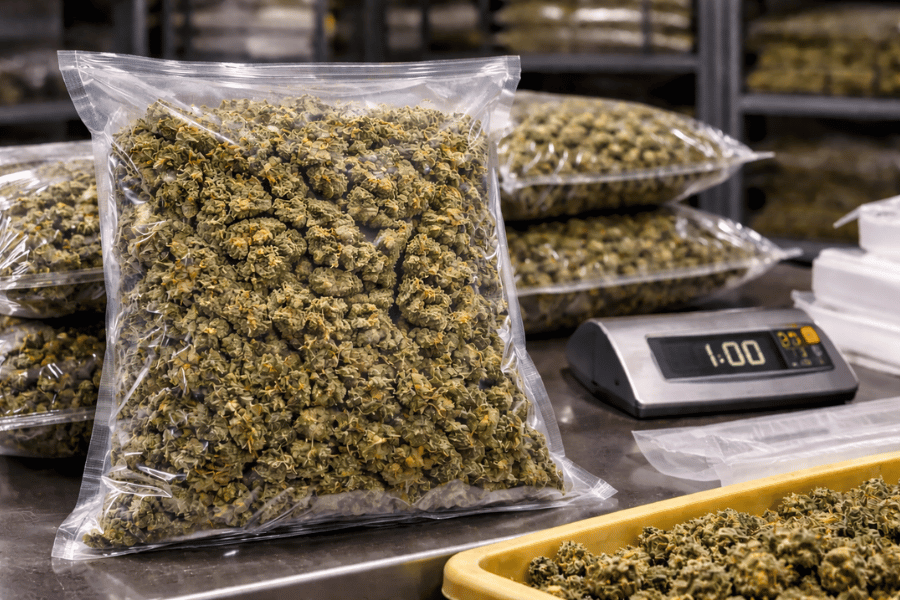
Long-term storage needs a monitoring routine, not just a humidity number chosen on packing day. This guide covers what to measure, where to measure it and how to respond when a stored lot changes. For the overall storage environment, start with our temperature and humidity guide.
Separate room readings from product measurements
A room hygrometer describes the surrounding air. A sensor inside a package describes that package's airspace after it has stabilized. Neither reading is automatically the same as the flower's moisture content. A water-activity test is a separate measurement and should follow the appropriate method.
Choose repeatable measurement locations
Place room sensors where they represent the stored material, rather than directly beside a door, supply vent or dehumidifier outlet. Note the location and keep it consistent. Follow the sensor manufacturer's placement, accuracy-check and stabilization instructions.
If you compare lots, use the same procedure and record the container type and sample conditions. A fast reading taken immediately after opening a cold package may not be comparable with one taken after temperature stabilization.
Keep a simple storage log
- Lot and container identification.
- Date, time, location and person checking.
- Temperature and relative humidity, with the instrument used.
- Relevant product measurements taken under your procedure.
- Seal condition, visible changes and any unusual odor.
- Action taken and the next review point.
Set the review frequency according to your validated process and the stability of the lot. A temperature excursion, packaging change or unexpected reading is a reason to review the lot sooner; it is not a reason to apply the same opening schedule to every container.
Respond to changes in context
First confirm the reading and check the sensor. Then review temperature history, packaging condition and recent handling. Avoid repeatedly opening stable packages simply to look at them. If a package contains droplets or visibly damp material, separate it for assessment under your quality procedure.
Humidity-control products have specific capacities and instructions. They do not replace completed drying, proper packaging or required testing. Do not assume that a display reading proves the absence of mold or other contamination.
Prevent temperature transitions from confusing the readings
Moving cold material into warm air can create condensation. Include the transition in your handling procedure and allow measurements to stabilize according to the equipment instructions. Read condensation after cold storage for that specific problem.
The useful outcome is a traceable record of each lot's condition and the decisions made about it. For equipment selection, compare flower and growing-media measurement tools.


Reader discussion 0