
Educación·5 min de lectura
Cannabis Packaging Design Has to Work After the Photo Shoot
A good-looking package still has to work when someone fills it, labels it, stores it and opens it. Jim Hadley shares a practical approach to testing packaging samples before approving a design.
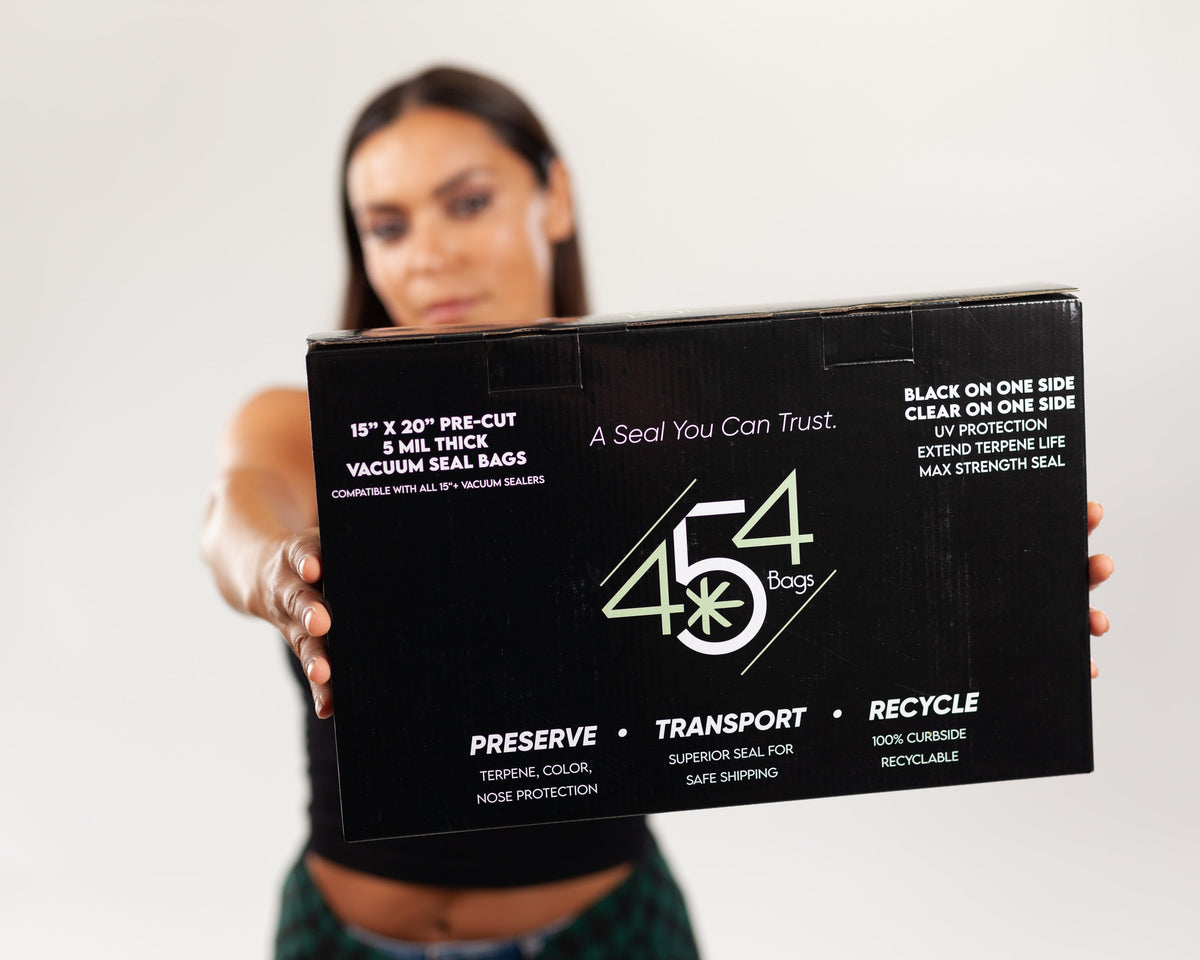
I'm a photographer, so I care about how packaging looks. Give me good light and a clean background, and I'll happily spend too long getting the angle right. A good-looking package deserves a good photo.
Working on the marketing side of 454 Bags also makes me think about everything that happens outside the frame. Someone has to fill that bag, label it, put it away, find it again, and open it. Cannabis packaging design should account for those people while the design is still easy to change.
The way I'd approach a new package is pretty simple: get a sample into somebody's hands early. You can learn a lot from watching someone use it without explaining what they're supposed to do.
Start with the job the package has to do
Before picking a finish or moving the logo around, write down where the package is going. A retail pouch and a liner inside a storage tote have different jobs. They shouldn't start with the same brief just because both hold cannabis.
For a retail package, I'd look at what a shopper can understand at a glance and what they need to find when they turn it over. For storage packaging, I'd pay more attention to how the container fits the workspace and how someone identifies it when several similar containers are sitting together.
That distinction helps with practical buying decisions, too. If you're comparing storage and exit packaging, decide which step you're buying for before choosing a size. Check the actual dimensions and usable space, including the room needed for the closure and any labels.
I would give a designer that information at the beginning. A note that says "the label needs to be readable while this is sitting in a tote" is much more useful than asking them to make the package feel premium.
Give the label a place to live
Imagine a pouch with a great illustration across the front. Now put the actual product label on it. Does it cover the part everyone liked? Does it wrap around an edge? Can you still read the product name when the pouch is filled?
Those are questions I'd rather answer with a sample than with a box of finished packaging. Build the layout around the information people will use, and try it at its real printed size. Zooming in on a laptop is generous to small type. Your customer's eyesight may be less generous.
SmashBrand discusses the customer-facing role of the package in its article on cannabis marketing and packaging design. The connection I care about is how the visual identity and product information work together once the package leaves the screen.
I'd print a sample label with realistic text lengths, including the longest product name in the range. Add the fields your team actually needs. Have the person responsible for your market's labeling requirements review that layout before approving the artwork.
Then look at the package under ordinary room lighting. Turn it sideways. Put it beside another version. If you have to explain which one is which, give the design another pass.
Let someone use the sample without a sales pitch
Here's the sample test I'd run before placing a larger packaging order. Put the proposed package in the space where it will be used, with the label attached and the intended contents or an appropriate stand-in inside. Ask the people who will handle it to walk through their normal work.
Let them pick it up, open it, close it, and put it away. If gloves are part of their routine, use gloves. If the package goes in a tote or carton, try that combination rather than judging each piece separately.
Pay attention to the small hesitations. Someone stops to find the opening. They turn the bag around twice to read the label. They have to rearrange the other packages to make this one fit. None of those observations needs a dramatic presentation. Write down what happened and ask whether another size or layout would make the job easier.
I'd also take a few ordinary phone photos during this test. No special lighting, no carefully chosen angle. A photo of a filled package on the actual shelf can tell a designer much more about the problem than an email saying "something feels off."
Treat this as a usability check. Claims about barrier performance or shelf life still need evidence for the specific package and conditions. An easy-to-close sample doesn't establish those things.
Make sure the approved version reaches the next person
A redesign isn't finished when somebody says the artwork looks good. There still needs to be a clear answer to which version is being ordered, which label goes on it, and what happens to the packaging already on hand.
Picture a small change to the label area. The new design is approved, but the packing team still has the old label template. Each file might look perfectly reasonable on its own. Together, they don't fit.
I'd keep the approved artwork and label template together with the package dimensions, supplier item number, and a dated photo of the approved sample. Give the files a clear version name. "Final final" is a surprisingly optimistic way to organize a production folder.
When the order arrives, compare it with that sample and record any differences before treating it as the approved package. If old and new versions will both be used for a while, make that choice explicit so people know what they're looking at.
Bring the design back to the person holding it
I still want the photo to look good. I want the website, the label, and the actual package to feel like they belong to the same brand. Getting the practical details right gives me something better to photograph.
Before your next packaging order, take one sample through the full sequence with the people who will use it. Bring their feedback back to the designer while there's still time to adjust the layout or size.
If you're working out which 454 format fits your setup, talk with our team about the dimensions and how you plan to use it. Start with those details. We can worry about the perfect camera angle after that.


Comentarios de lectores 0