
Education·7 min branja
Cannabis Pack-Out Day Preparation Guide for Commercial Growers
Prepare for cannabis pack-out day with a clear workflow for inventory checks, order staging, labels, bag inspection, buyer sample matching, movement logs, and final order review before bulk flower leaves the facility.
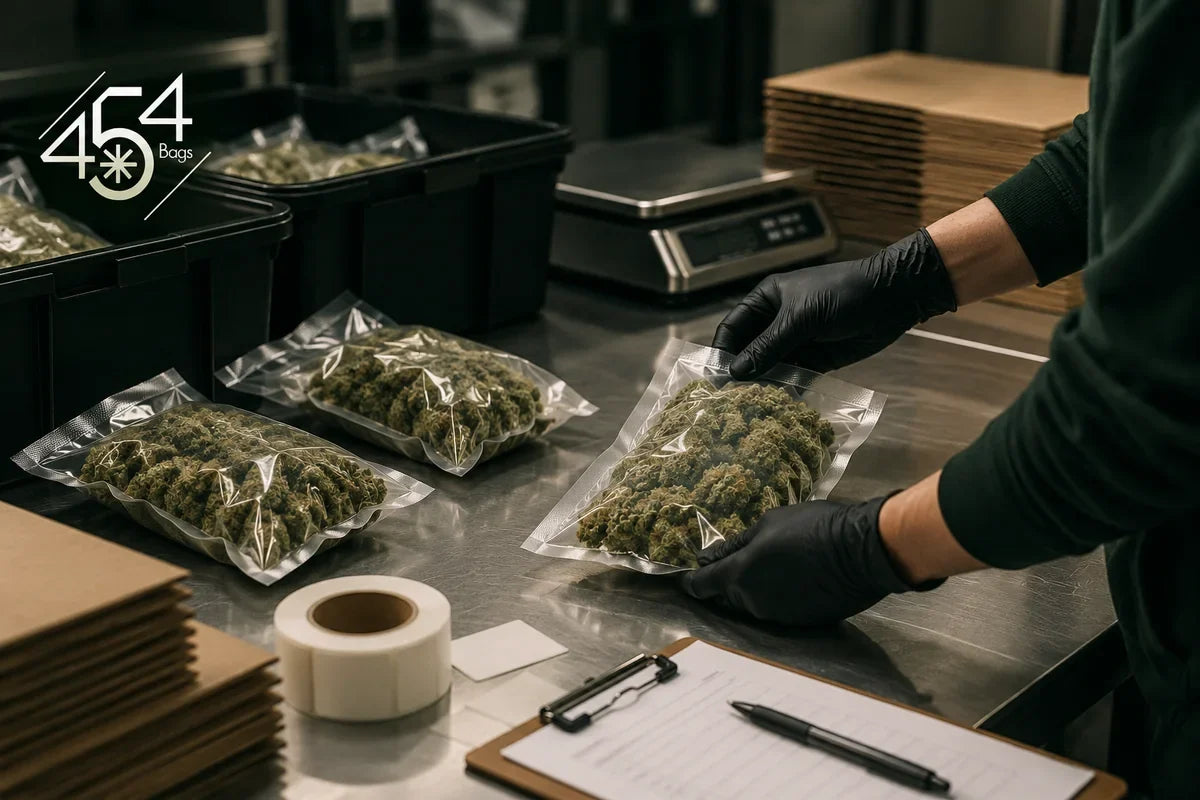
Pack-out day is when stored cannabis finally moves from inventory into orders, shipments, pickups, or buyer-ready staging. If the room is organized, the process feels smooth. If the room is messy, pack-out day can turn into a scramble of missing labels, wrong batches, damaged bags, rushed re-bagging, and last-minute quality checks. That is why every commercial team needs a clear plan for cannabis pack-out day preparation.
Pack-out is not just fulfillment. It is the final checkpoint before bulk flower leaves your control. The way a batch is pulled, inspected, labeled, staged, and presented can affect buyer confidence. Even strong flower can create problems if the wrong lot is pulled, the bag looks rough, the label is unclear, or the team cannot quickly confirm product details.
This cannabis pack-out day preparation guide breaks down how commercial growers can get storage rooms, supplies, staff, labels, inventory, and buyer-ready product organized before the pressure starts.
Why Cannabis Pack-Out Day Preparation Matters
Pack-out day is where storage, inventory, sales, and fulfillment all meet. A weak process creates delays across the entire operation. One missing label can slow an order. One misplaced batch can force the team to search the room. One damaged bag can require a careful transfer. One inventory mismatch can make sales look unprepared.
Strong cannabis pack-out day preparation helps teams reduce mistakes before product leaves the facility. The goal is to make sure every order is accurate, clean, protected, and easy to verify.
A good pack-out process helps prevent:
- Wrong batch pulls
- Missing or unclear labels
- Last-minute re-bagging
- Damaged product presentation
- Inventory mismatches
- Buyer sample confusion
- Delayed pickups or shipments
Start With the Pack-Out Schedule
Before product is pulled, the team should know what is leaving, when it is leaving, and who is responsible for the order. Pack-out day gets messy when orders are treated like surprises.
Create a simple pack-out schedule that lists each order, buyer, strain, batch number, weight, pickup or shipping time, and product status. This schedule should be reviewed before the team starts moving bags.
Your pack-out schedule should include:
- Buyer or order name
- Strain name
- Batch or lot number
- Weight needed
- Pickup, delivery, or shipping time
- Storage location
- Approval status
- Assigned staff member
When the team knows the order of operations, they can stage product in a controlled way instead of rushing through the room.
Verify Inventory Before Pulling Product
Inventory should be confirmed before bulk flower is moved. If the system says a batch is available, the physical room should match that record. Do not wait until the buyer is waiting to find out a partial bag was moved, split, sampled, or placed on hold.
Before pack-out starts, confirm:
- The batch is physically in the correct location
- The available weight matches the order
- The product status is approved for sale or fulfillment
- The label matches the inventory record
- No hold, review, or quality note is attached to the batch
This step protects the team from pulling the wrong product or staging flower that should not leave yet.
Prepare the Right Bags, Liners, Labels, and Supplies
Pack-out day slows down fast when basic supplies are missing. Before orders are pulled, make sure your team has the correct bags, tote liners, labels, markers, gloves, scales, carts, and backup supplies ready.
Supplies should be staged in a clean, organized area so the team does not have to search while product is already open or moving.
Pack-out supplies may include:
- Bulk storage bags
- Tote liners
- Fresh labels
- Permanent markers
- Gloves
- Scale access
- Cleaning supplies
- Carts or bins for safe movement
- Backup bags for damaged packaging
The goal is to avoid rushed decisions. If the right supplies are ready, the team can move product cleanly without unnecessary re-bagging or delays.
Create a Ready-to-Stage Area
Pack-out should not happen in the middle of a crowded storage room. Create a dedicated ready-to-stage area where approved product can be pulled, checked, labeled, and organized before it leaves.
This area should be clean, easy to access, and separate from incoming or held product. It should only contain product that is actively being prepared for pickup, delivery, or shipment.
A ready-to-stage area helps teams:
- Keep orders separated
- Prevent batch mix-ups
- Inspect bag condition before release
- Confirm labels and weights
- Reduce unnecessary movement in the storage room
Clear staging also makes manager review easier. Instead of searching storage, the final product can be checked in one controlled space.
Inspect Bag Condition Before Release
Pack-out day is the last chance to catch presentation issues before the buyer sees the product. Every bag should be inspected before release. A bag that is dirty, torn, overfilled, crushed, poorly sealed, or labeled badly can create a weak first impression.
Before product leaves, check:
- Bag condition
- Seal quality
- Label placement
- Readable batch information
- Visible compression or rough handling
- Clean exterior presentation
- Correct product status
If a bag needs to be replaced, document the transfer and update the label before the order moves forward. Re-bagging should be careful, controlled, and limited to situations where it is actually needed.
Confirm Labels Match the Order
Labels should be checked before product leaves the facility. A correct label protects the buyer, the sales team, the inventory team, and the grower.
Every pack-out label should match the order details. Confirm the strain name, batch number, weight, harvest date, storage date, and product status. If the order includes multiple lots or partial bags, each one should be labeled clearly.
Do not rely on memory or verbal confirmation. Pack-out day should be driven by written records and visible labels.
Check Buyer Sample Consistency
If a buyer approved a sample before pack-out, make sure the order matches the lot that sample came from. Buyer frustration can happen quickly if the bulk product does not match what they reviewed.
Before release, confirm:
- The buyer sample came from the same lot
- The order is being filled from the correct batch
- The sample pull was logged
- The remaining batch still matches the approved product
- Any partial lot changes are documented
This protects buyer trust. A clean sample-to-order connection helps prevent disputes and keeps sales conversations focused on the product instead of the process.
Limit Who Can Pull and Move Product
Pack-out day should not involve everyone moving bags at once. Too many hands create confusion. One person may pull a batch, another may move it, another may open it, and another may update the record. If roles are unclear, mistakes become easier.
Assign specific people to pull product, verify labels, update inventory, inspect bag condition, and stage orders. This keeps the process controlled and reduces random movement.
Clear roles might include:
- Inventory lead
- Storage room lead
- Quality check lead
- Fulfillment lead
- Manager final approval
Each person should know what they are responsible for before pack-out begins.
Document Every Product Movement
If product moves on pack-out day, the movement should be logged. This includes pulling from storage, splitting a batch, replacing a bag, staging an order, or returning product to storage.
A simple movement log can include:
- Date and time
- Batch or lot number
- Strain name
- Weight moved
- Original location
- New location
- Reason for movement
- Employee initials
This keeps the physical room and inventory system aligned. If questions come up later, your team can trace what happened.
Run a Final Pack-Out Check
Before product leaves the facility, run one final check. This step should confirm order accuracy, bag condition, label quality, and product status.
A final cannabis pack-out day preparation check should confirm:
- The correct buyer or order is attached to the product
- The correct strain and batch were pulled
- The weight matches the order
- The label is complete and readable
- The bag is clean and in good condition
- The product is approved for release
- The order is staged in the correct pickup or shipping area
- Inventory has been updated
This final check is simple, but it can prevent expensive mistakes.
Cannabis Pack-Out Day Preparation Checklist
Use this checklist before pack-out begins:
- Create a pack-out schedule for all orders
- Verify inventory before pulling product
- Stage bags, liners, labels, gloves, and backup supplies
- Create a clean ready-to-stage area
- Inspect bag condition before release
- Confirm labels match the order
- Check buyer sample consistency
- Limit who can pull, open, or move product
- Document every product movement
- Run a final order check before pickup or shipment
Make Pack-Out Day Cleaner and Faster
Cannabis pack-out day preparation helps commercial growers protect product quality, avoid fulfillment mistakes, and create a better buyer experience. When inventory is verified, supplies are ready, labels are clear, and staging is controlled, the whole process moves faster.
454 Bags helps commercial cannabis teams prepare for real post-harvest workflows with bulk storage bags, tote liners, and harvest supplies built for high-volume operations. When your pack-out system is ready before product moves, your team can protect every batch until the final handoff.


Razprava bralcev 0