
Product Blogs·2 min čítania
Can Terpenes Transfer Between Cannabis Strains Stored Together?
Understand aroma mixing when cannabis strains share a container, how it differs from outside odors, and how separate storage helps preserve lot identity.
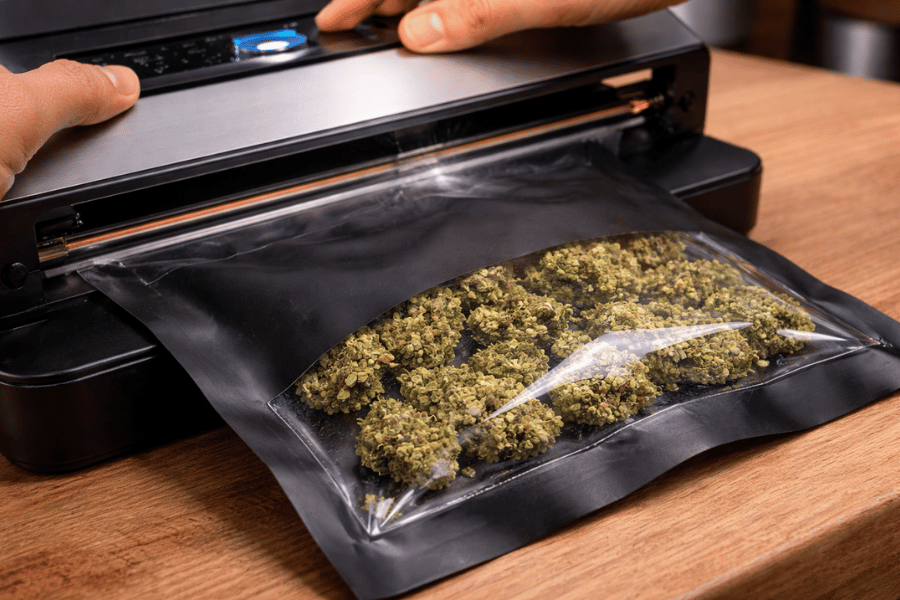
Putting two cannabis strains in the same container exposes them to a shared airspace. Volatile aroma compounds can move into that airspace, so the combined smell may change. That is different from proving how much of a particular terpene has moved into either flower sample.
Shared aroma does not mean identical terpene profiles
Smelling one strain on another is not a measurement of terpene concentration. Temperature, storage duration, starting composition, the container and repeated opening all complicate the result. Without before-and-after analysis, avoid claims that mixing flower transfers a predictable percentage of terpenes or improves potency.
Research has examined the effect of terpene-containing vapor on stored cannabis under controlled conditions. That work does not establish a universal transfer rate for two retail strains placed in one jar. See the vapor-phase terpene study for the experimental context.
Three problems that can look similar
- Shared headspace: different lots contribute aroma to the same enclosed space.
- Direct mixing: pieces of flower or loose material become physically mixed, making lot identity harder to maintain.
- Outside odors: packaging, cleaners or the storage environment introduce unrelated smells.
The third problem belongs in a different workflow. Read our guide to outside-odor contamination for storage-area and packaging checks.
Store separately when strain identity matters
Use a separate, suitable container for each identified lot. Keep the lot label with the material during sampling, weighing and repacking. Avoid sharing unclean tools or returning mixed samples to their original containers. If different lots must share an outer tote, keep their inner packages separately closed and clearly identified.
A bag's appearance or thickness alone does not establish its barrier performance. Review its stated material, closure and intended use, and check the seal in your actual workflow. Do not assume that every plastic bag blocks every aroma compound equally.
Investigate a changed smell before blaming transfer
Record which lots shared the space, whether packages were open, and when the change was first noticed. Compare retained samples if you have them. Look for packaging damage, temperature changes and outside odor sources. A smell check can identify a reason to investigate, but it cannot establish a chemical profile or verify product safety.
Keep storage decisions focused on the lot
Separate storage supports traceability and makes comparisons easier. It does not freeze a terpene profile in time: aroma can change during storage even when a lot is kept alone. For the environmental side, see storage temperature and humidity. Compare available formats in Storage & Exit Packaging.


Diskusia čitateľov 0